
Reversing
According to the Health & Safety Executive nearly a quarter of all deaths involving vehicles at work occur during reversing. Many other reversing accidents do not result in injury but cause costly damage to vehicles, equipment and premises.
Avoiding reversing should always be the first consideration when trying to reduce the risk.
Where reversing can’t be avoided the following measures should be taken:
- Remove the need for reversing as much as possible
- By setting up one-way systems
- Drive-through loading and unloading positions
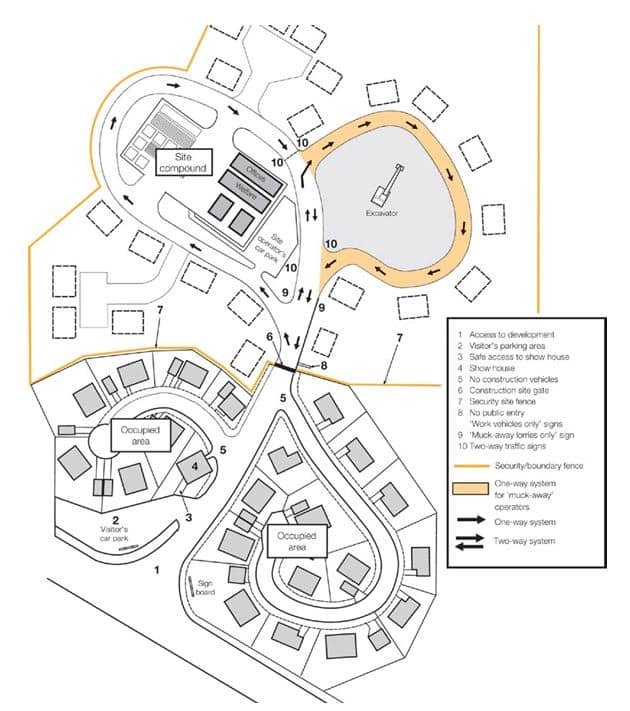
- Ensure visiting drivers are familiar with the layout of the workplace, and with any site rules
- Do drivers have to report to reception on arrival?
- Do driver follow a specific route?
- Where are delivery points on that site? etc.
- ‘Reversing areas’ should be planned out and clearly marked
- People who do not need to be in reversing areas should be kept well clear
- If suitable, use a Traffic Marshal to:
- Keep the reversing area free of pedestrians
- To guide drivers
It’s important to be aware that the use of Traffic Marshals is not allowed in some industries due to the size of vehicles involved, and the difficulty that drivers have in seeing them.
- Traffic Marshals will need to:
- Use a clear, agreed system of signalling
- Be visible to drivers at all times
- If drivers lose sight of the signallers they should know to stop immediately
- Consider whether portable radios or similar communication systems would be helpful
- Site layouts can be designed (or modified) to increase visibility for drivers and pedestrians
- By carefully planning any areas allowed for reversing
- By installing fixed mirrors in smaller areas
- Reducing the dangers caused by ‘blind-spots’
- Most vehicles already have external side-mounted and rear-view mirrors fitted
- These need to be kept clean and in good repair
- Refractive lenses fitted to rear windows or closed-circuit television systems can be used to help drivers to see behind the vehicle.
- If drivers cannot see behind the vehicle, they should leave their cab and check behind the vehicle before reversing
- Most vehicles already have external side-mounted and rear-view mirrors fitted
- Reversing alarms can be fitted
- Other safety devices can be fitted to vehicles
- For example, a number of ‘sensing’ and ‘trip’ systems are available, which either warn the driver or stop the vehicle when an obstruction is detected close to, or comes in contact with, the reversing vehicle.
- Stops such as barriers, escape doors or buffers at loading bays can be used
- They should be highly visible, and sensibly positioned
- White lines on the floor can help the driver position the vehicle accurately