
A Complete Guide to Weekly Fire Alarm Testing & UK Legal Compliance
Online Fire Alarm Testing Course & UK Compliance Guide
Ensuring fire safety in a commercial building, construction site, or multi-occupancy premises is one of the most critical responsibilities assigned to business owners, employers, and designated site personnel. While having a modern fire alarm system installed is an essential first step, it is only as effective as its ongoing testing and maintenance.
Under UK law, workplace fire alarm systems must be inspected, tested and logged. A single missed weekly check or unrecorded panel fault can put lives at risk and lead to severe legal or financial penalties during an inspection by the local Fire and Rescue Authority.
This comprehensive guide breaks down UK legal requirements, step-by-step weekly procedures, and how completing an online fire alarm testing course gives designated site staff the confidence and accredited qualifications needed to keep premises compliant.
UK Fire Safety Legislation: Regulations for Responsible Persons
In England and Wales, commercial fire safety is governed by the Regulatory Reform (Fire Safety) Order 2005 (often referred to as the FSO or Fire Safety Order), alongside updated requirements under Section 156 of the Building Safety Act. Statutory guidance published on GOV.UK Workplace Fire Safety Responsibilities highlights three fundamental legal duties:
- The Responsible Person: Every commercial building must have a designated “Responsible Person” (such as the employer, premises manager, or building owner) accountable for fire safety.
- The Competent Person: The Responsible Person can delegate day-to-day testing and logging duties to a designated “Competent Person” who has received adequate training and technical instruction.
- Mandatory Fire Safety Logbooks: All fire safety maintenance, weekly tests, and panel errors must be logged in a dedicated fire safety logbook.
Failure to maintain accurate inspection records can lead to formal enforcement notices, heavy fines, or prosecution by local Fire and Rescue Authorities.
BS 5839-1 Requirements for Weekly Fire Alarm Testing
The recognised technical standard for fire detection systems in non-domestic UK premises is BS 5839-1. While qualified engineers conduct comprehensive bi-annual and annual system servicing, BS 5839-1 explicitly mandates regular internal checks carried out by trained site personnel:
1. The Weekly Fire Alarm System Test
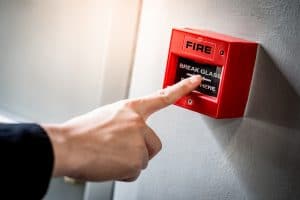
At least once per week, a manual call point (break glass unit) must be activated during normal working hours. The core objectives are to:
- Verify that the main control panel correctly receives and displays the signal within seconds.
- Confirm that sounders and visual strobe lights activate clearly across all building zones.
- Ensure auxiliary mechanisms—such as automatic magnetic door releases—release correctly upon alarm signal.
- Cycle through a different call point each week so every unit on site is tested over time.
2. Routine Visual Inspections
In addition to weekly sounder checks, designated staff must inspect panel fault indicators, check standby battery health, and verify emergency lighting units.
Step-by-Step: How to Carry Out a Weekly Fire Alarm Test
Executing a weekly test requires a structured approach to avoid false alarms and ensure clear compliance records:
+-------------------------------------------------------------------+
| STEP 1: Notify Building Occupants & Alarm Receiving Centre (ARC)   |
+-------------------------------------------------------------------+
                                  |
                                  v
+-------------------------------------------------------------------+
| STEP 2: Activate a Manual Call Point using a Test Key             |
+-------------------------------------------------------------------+
                                  |
                                  v
+-------------------------------------------------------------------+
| STEP 3: Check Control Panel Zone Display, Sounders, & Doors       |
+-------------------------------------------------------------------+
                                  |
                                  v
+-------------------------------------------------------------------+
| STEP 4: Reset the Call Point & Main Panel, Re-arm ARC Link        |
+-------------------------------------------------------------------+
                                  |
                                  v
+-------------------------------------------------------------------+
| STEP 5: Complete the Fire Alarm Testing Logbook Entry             |
+-------------------------------------------------------------------+
- Pre-Test Notification: Announce the scheduled test time to building occupants. If your system links to an off-site Alarm Receiving Centre (ARC), contact them beforehand to set the line to “Test Mode” so emergency services aren’t dispatched.
- Manual Call Point Activation: Insert the test key into the designated call point unit to drop the operating element without breaking the glass.
- Audibility & Panel Verification: Ensure alarm sounders ring clearly across all zones. Check the main control panel screen to confirm the correct zone was triggered.
- System Reset: Remove the key to reset the call point, reset the main control panel, and notify the ARC to take the system off test mode.
- Logbook Documentation: Record the test date, time, call point location, tester’s name, and any identified panel errors or silent sounders.
Expert Practical Tip: When inserting a test key into older manual call points, insert the key straight and apply gentle forward pressure. Forcing the key at an angle can bend internal plastic reset pins, resulting in false panel fault codes.
Take a Free Fire Alarm Test Practice Module Online
If you are a landlord, facilities manager, or appointed site safety representative wanting to gauge your current knowledge of BS 5839-1 guidelines, you can test your skills online first. Evaluate your grasp of panel operations, call point key handling, and legal compliance by completing a free interactive fire alarm testing mock test.
Frequently Asked Questions (FAQs) About Fire Alarm Testing
How often must a workplace fire alarm be tested in the UK?
Under BS 5839-1 guidance and the Regulatory Reform (Fire Safety) Order 2005, a manual call point test must take place at least once every week during normal business hours.
Who is legally allowed to conduct weekly fire alarm tests?
Any designated “Competent Person” can carry out weekly tests. While you do not need to be a qualified electrician, you must have received adequate training to operate the panel safely, reset call points, recognize fault indicators, and update the site logbook accurately.
What should I do if the fire alarm panel displays a fault code?
Note down the precise error message or code from the control panel display, record it immediately in your fire logbook, and contact your fire maintenance contractor or premises manager for repairs. Never leave a panel fault unaddressed.
Are electronic eLogbooks legally accepted during fire safety inspections?
Yes. UK law permits fire safety records to be stored digitally, provided they are readily accessible, kept up to date, and available for inspection by local Fire and Rescue Officers.
How long does an online fire alarm testing certificate remain valid?
While completion certificates do not have a strict legal expiry date, industry standards recommend refreshing your fire safety awareness every 2 to 3 years to keep pace with updating legislation and British Standards.
Enrol in the Accredited Fire Alarm Testing Course Today
Maintaining workplace fire safety compliance is simple when your site team has the right training and tools. By undertaking an accredited online course, businesses protect their workforce, maintain full legal compliance, and prevent costly operational disruptions.
- Practice First: Check your understanding with a free online fire alarm testing mock test.
- Get Certified Today: Enrol in the accredited fire alarm testing course from Health & Safety Training 1st and download your instant digital certificate upon completion.