
Hot Work Training: The Mandatory Legal Requirements for UK Sites

 3 min read
Hot Work Training: The Mandatory Legal Requirements for UK Sites
If you are carrying out tasks that involve open flames, sparks, or localized heat on a UK construction site, you are operating under strict regulatory scrutiny. Site managers and Principal Contractors cannot legally allow you to operate equipment like angle grinders, blowlamps, or welding torches without proof of competence.
Under Health and Safety Executive (HSE) regulations, proving competence requires formal education on fire hazards and prevention protocols. To satisfy these legal requirements and ensure you are instantly cleared to work, completing an approved hot work training course is the most direct way to secure your compliance and protect the site.
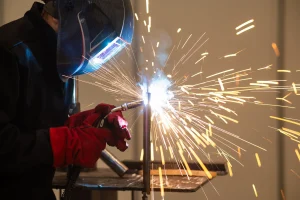
The HSE Legal Framework for Hot Work
There is no single, government-issued “license” for hot work, but the law explicitly mandates proper training. The requirement stems from core pieces of UK legislation and industry-standard guidance:
- The Health and Safety at Work etc. Act 1974: Employers have a statutory duty to provide whatever information, instruction, training, and supervision is necessary to ensure the health and safety of their employees.
- The Management of Health and Safety at Work Regulations 1999: This mandates that employers must carry out comprehensive risk assessments and ensure all workers are legally “competent” to handle high-risk operations.
- HSG168 and JCoP: The HSE’s HSG168 (Fire Safety in Construction) and the Joint Code of Practice (JCoP) on the Protection from Fire of Construction Sites form the recognized industry standards that insurers and site managers enforce daily.
If a fire breaks out and an investigation reveals that the operator was never formally trained to manage combustion risks, both the worker and the employer face severe legal consequences, including heavy fines, site closure, or prosecution.
What Happens During an HSE Spot Check?
HSE inspectors frequently conduct unannounced spot checks on UK construction sites, specifically targeting high-risk activities like hot work. If an inspector catches you performing hot work, they will immediately ask to see three things:
- The Signed Permit to Work (PTW): They will check that the permit is active, correctly filled out, and signed by an authorized manager.
- The Designated Fire Watch: They will verify that a competent person has been assigned to monitor the area for smoldering materials and that they know what to do in an emergency.
- Proof of Competence and Training: They will ask to see your training records.
If you cannot produce proof of appropriate health and safety training for site workers, the inspector has the authority to issue a Prohibition Notice. This instantly stops all work in that area until the issue is resolved. For contractors, a Prohibition Notice is disastrous; it damages the company’s reputation and halts project progress. This is exactly why site managers are completely unforgiving when it comes to checking your credentials at the gate.
Why the Permit to Work (PTW) System Dictates Training
Beyond the HSE, the reality of getting onto a commercial site is governed by the Permit to Work (PTW) system. Hot work is classified as a high-risk activity, meaning it cannot begin until a site manager issues a formal permit.
Site managers will not issue a PTW without verifying your training credentials because:
- Site Insurance: Construction insurance policies contain strict clauses regarding hazardous work. Allowing an untrained worker to operate a torch can instantly void the entire site’s fire insurance policy.
- Managerial Accountability: The site manager signing the permit assumes responsibility for the safety of the area. They rely on your certified training to guarantee you know how to prepare a zone properly and prevent conduction fires.
The 10-Metre Rule Explained
One of the most critical practical protocols you must understand is the 10-metre rule. Before any hot work can commence, the Joint Code of Practice (JCoP) states that the area must be meticulously prepared and made safe.
- Clearing Combustibles: All combustible materials—including timber, packaging, flammable liquids, and waste—must be entirely removed from a 10-metre radius around the hot work area.
- Using Fire Blankets: If heavy or fixed combustible materials within that 10-metre zone cannot be moved, they must be completely covered with non-combustible, fire-resistant blankets or drapes.
- Checking Voids and Gaps: Sparks and molten slag can easily fall through gaps in the floor or travel through wall cavities. The 10-metre rule also applies vertically; you must check the floors below, ceiling voids, and the rooms adjacent to your workspace.
- Extinguisher Placement: A suitable fire extinguisher (e.g., CO2 or Dry Powder) must be placed directly at the point of work for immediate reach, not 30 metres away down a corridor.
Without recognized training, workers often misjudge these distances or fail to check hidden voids, leading to catastrophic conduction fires.
What Your Training Must Cover to be Compliant
To satisfy site requirements and the HSE, your training must go beyond basic common sense. It needs to align with current industry standards for fire prevention. A fully compliant training curriculum will cover:
- Hazard Identification: Recognizing risks like explosive dust atmospheres, flammable vapors, and heat conduction through metal pipes into adjacent rooms.
- Permit Compliance: How to correctly read, implement, and legally close out a PTW.
- The Fire Watch Protocol: The mandatory requirement to designate a fire watch during the work and for a minimum of 60 minutes after all tools are powered down to monitor for smoldering materials.
- Equipment and Extinguishers: Selecting the correct fire extinguisher and ensuring the safe zone is strictly enforced.
Ensure Your Knowledge is Up to Standard
Because regulations and site protocols are frequently updated, relying on outdated knowledge or informal “on-the-job” instruction can lead to permit refusals or dangerous mistakes on site.
Before you step onto a live site or apply for your next permit, it is highly recommended to evaluate your current understanding of HSE expectations. You can quickly assess your baseline knowledge by taking a free hot work mock test to identify any gaps in your safety protocols.
Investing in the correct training is not just about ticking a regulatory box; it is the fundamental requirement for keeping your career moving, securing your access to premium sites, and ensuring everyone goes home safely.
Frequently Asked Questions About Hot Work Training
How long does hot work training last? While the HSE does not explicitly set an expiration date on training, industry standard practice dictates that hot work certificates should be renewed every 3 years. This ensures workers stay up to date with the latest fire safety regulations, JCoP updates, and site protocols.
Who is responsible for issuing a hot work permit? A hot work permit can only be issued by a competent, designated individual on-site—typically the Site Manager, Principal Contractor, or a dedicated Fire Safety Officer. The person carrying out the work cannot issue a permit to themselves.
Does using an angle grinder count as hot work? Yes. Even though it does not use an open flame, grinding metal generates a significant amount of high-heat sparks that can easily travel and ignite combustible materials. Therefore, grinding falls strictly under hot work protocols and requires a permit.
What is the minimum time for a fire watch? Under standard UK site regulations, a fire watch must be maintained continuously during the hot work and for a minimum of 60 minutes after the work has completely finished. In higher-risk environments, site managers or insurance providers may extend this to 2, 3, or even 4 hours.
Can I take hot work training online? Yes. As long as the course curriculum covers the mandatory theoretical aspects—such as hazard identification, fire extinguisher selection, the 10-metre rule, and the Permit to Work system—online training is widely accepted by UK site managers as proof of competence.
What is the minimum time for a fire watch? Under standard UK site regulations, a fire watch must be maintained continuously during the hot work and for a minimum of 60 minutes after the work has completely finished. In higher-risk environments, site managers may extend this to 2 hours or more.
Can I take hot work training online? Yes. As long as the course curriculum covers the mandatory theoretical aspects—such as hazard identification, fire extinguisher selection, and the Permit to Work system—online training is widely accepted by UK site managers as proof of competence.