
Silica Dust Awareness in the UK: Health Risks, COSHH Regulations & Training
In the UK construction, stonemasonry, refurbishment, and manufacturing sectors, respirable crystalline silica (RCS) represents one of the most significant environmental health hazards facing site personnel and trade specialists. Frequently characterised across industry literature as a “silent killer,” airborne silica dust creates long-term, irreversible respiratory conditions when safety protocols are overlooked. The microscopic nature of the particles means that significant damage often occurs silently long before physical symptoms manifest.
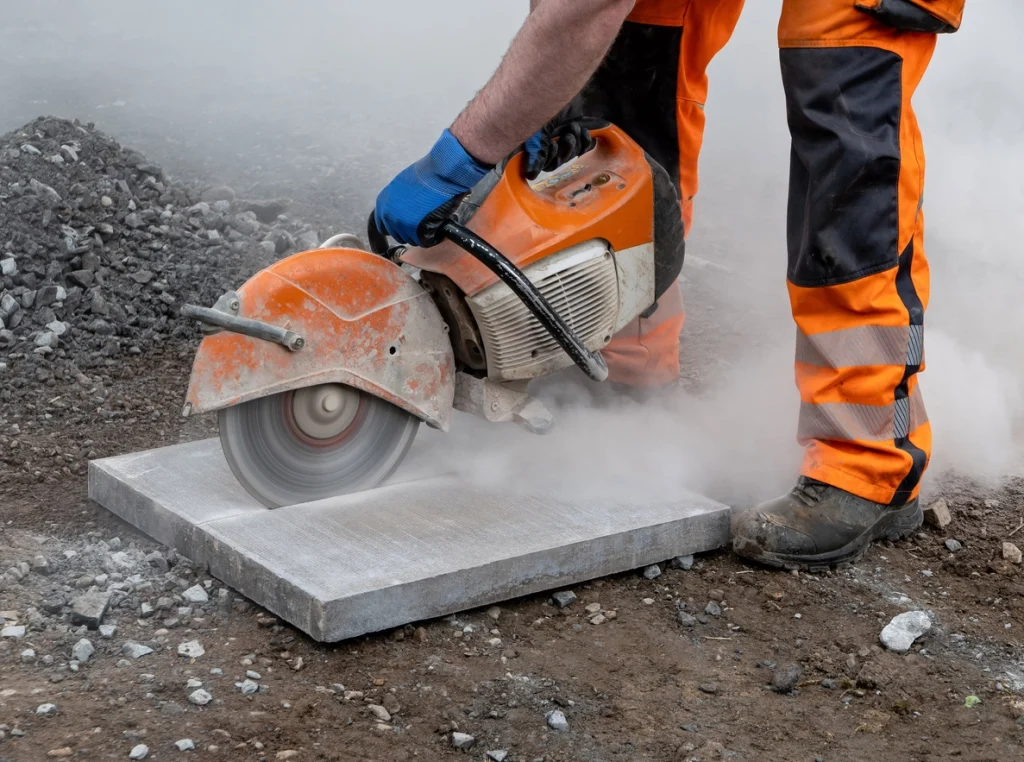
Whether operating as an employer charged with maintaining statutory site compliance, a site manager managing daily risk assessments, or a self-employed tradesperson seeking to protect long-term health, understanding the nature of silica dust, UK legal requirements, and proper control measures is vital.
Understanding Crystalline Silica and RCS
Crystalline silica is a natural mineral abundant in common building materials used across construction projects throughout Great Britain. Materials containing high concentrations of silica include:
- Concrete, mortar, and rendering products
- Facing bricks, concrete blocks, and paving slabs
- Natural sandstone, granite, and slate
- Engineered stone and composite worktops
- Refractory bricks and ceramic tiles
Under normal conditions, these solid materials pose minimal health risks. However, common workplace operations such as cutting, drilling, chasing, grinding, sanding, or sawing release hazardous airborne dust.
The primary hazard stems from Respirable Crystalline Silica (RCS). These particles are incredibly small—roughly 100 times smaller than a standard grain of sand—allowing them to bypass the body’s natural respiratory defenses. When inhaled, RCS penetrates deep into the alveolar regions of the lungs, causing inflammation, tissue scarring (fibrosis), and permanent loss of lung capacity.
Key Health Risks Associated with RCS Exposure
- Silicosis: A chronic, progressive, and incurable lung disease resulting from long-term exposure to RCS. Scar tissue builds up in the lungs, leading to severe breathing difficulties and increased strain on the heart.
- Chronic Obstructive Pulmonary Disease (COPD): A group of lung conditions causing airflow blockage and breathing-related issues, including chronic bronchitis and emphysema.
- Lung Cancer: The International Agency for Research on Cancer (IARC) classifies respirable crystalline silica as a Group 1 human carcinogen. Prolonged exposure substantially increases the risk of developing lung cancer.
- Kidney Disease and Systemic Sclerosis: Emerging medical evidence links prolonged dust inhalation with autoimmune and kidney-related complications.
Legal Obligations Under UK Law and COSHH
In Great Britain, health and safety responsibilities regarding hazardous dust are governed by robust legislation. Employers, principal contractors, and duty holders have a clear statutory duty under the Control of Substances Hazardous to Health Regulations 2002 (COSHH) to identify risks and prevent or adequately control worker exposure.
Workplace Exposure Limits (WEL)
Under COSHH, the mandatory Workplace Exposure Limit (WEL) for Respirable Crystalline Silica is 0.1 mg/m³, calculated over an 8-hour Time-Weighted Average (TWA). Because RCS is a recognised carcinogen, employers must reduce exposure to as far below this legal threshold as is reasonably practicable.
The Hierarchy of Dust Control
Relying solely on disposable dust masks is insufficient under UK law. Employers must follow a strict hierarchy of controls when managing silica risks on site:
- Elimination or Substitution: Design out high-silica materials where feasible, or use pre-cut and pre-fabricated materials to eliminate on-site cutting.
- Engineering Controls:
- Water Suppression: Applying continuous water feeds to cut-off saws and grinding equipment to suppress dust at the point of origin.
- Local Exhaust Ventilation (LEV): Fitting tools with extraction hoods attached to M-Class or H-Class industrial dust extractors.
- Administrative Controls: Limiting the number of workers in dust-generating areas, rotating shifts, and establishing clear safety signage.
- Respiratory Protective Equipment (RPE): Utilizing appropriate RPE (such as FFP3 disposable respirators or powered air hoods) as a secondary line of defense, backed by formal Face Fit Testing for all wearers.
The Role of Training in Workplace Compliance
Providing adequate information, instruction, and training is a mandatory legal requirement under Section 2 of the Health and Safety at Work etc. Act 1974 and Regulation 13 of COSHH. Workers must understand why controls are necessary, how to operate dust extraction systems correctly, and how to maintain their protective equipment.
Completing structured awareness training ensures that site personnel are equipped to identify hazards before work commences, implement appropriate engineering controls, and maintain full compliance with Health and Safety Executive (HSE) standards.
Frequently Asked Questions (FAQs)
1. Who is legally required to undertake silica dust awareness training?
Any worker, tradesperson, or supervisor operating in environments where silica-containing materials are disturbed requires adequate training. This includes bricklayers, stonemasons, demolition operatives, dryliners, kitchen fitters, utility workers, and site managers.
2. How can workers assess their current knowledge before taking a full qualification?
Before committing to formal assessments or site inductions, individuals can test their understanding of COSHH limits, control measures, and workplace risks by taking Health and Safety Training 1st Silica Dust Practice Test.
3. Are FFP2 masks suitable for protection against silica dust?
No. In the UK, the HSE specifies that disposable respirators used for protection against respirable crystalline silica should offer an Assigned Protection Factor (APF) of at least 20, which requires an FFP3 mask or higher. FFP2 masks do not offer adequate filtration for RCS.
4. What is Face Fit Testing and why is it mandatory?
Face Fit Testing ensures that tight-fitting respiratory equipment forms an effective seal against the wearer’s face. Without a proper fit test—or if the wearer has facial hair—contaminated air can leak around the edges of the mask, rendering the protection ineffective.
5. What are HSE inspectors looking for during site visits?
HSE inspectors frequently conduct targeted dust inspection campaigns across construction sites. They look for evidence of risk assessments, operational water suppression or M/H-Class extraction equipment, valid Face Fit Test records, appropriate FFP3 masks, and training certificates proving staff awareness.
Summary and Next Steps
Managing silica dust risks is essential for preserving worker health and avoiding regulatory enforcement action from the HSE. By understanding the properties of RCS, enforcing legal controls under COSHH, and ensuring all personnel receive structured education, businesses can maintain safe, compliant working environments across all construction and manufacturing projects.
To gain a comprehensive understanding of site safety requirements, health hazards, and regulatory controls, professionals can enroll in the fully accredited Health and Safety Training 1st Silica Dust Awareness Course. Completing the online training provides an industry-recognised certificate to demonstrate compliance during site audits and safety inspections.