
A Complete Guide to Harness and Lanyard Inspection in the UK
Harness and Lanyard Inspection in the UK
Working at height remains one of the primary causes of occupational fatalities and major injuries in the UK construction, utilities, and industrial maintenance sectors. Personal Fall Protection Systems (PFPS)—specifically body harnesses, energy-absorbing lanyards, connectors, and anchorage points—serve as a worker’s last line of defence against catastrophic falls. However, fall protection equipment is only as safe as its last inspection. A single frayed stitch, corroded buckle, or chemically damaged webbing strand can render a harness useless when subjected to the dynamic shock forces of a fall.
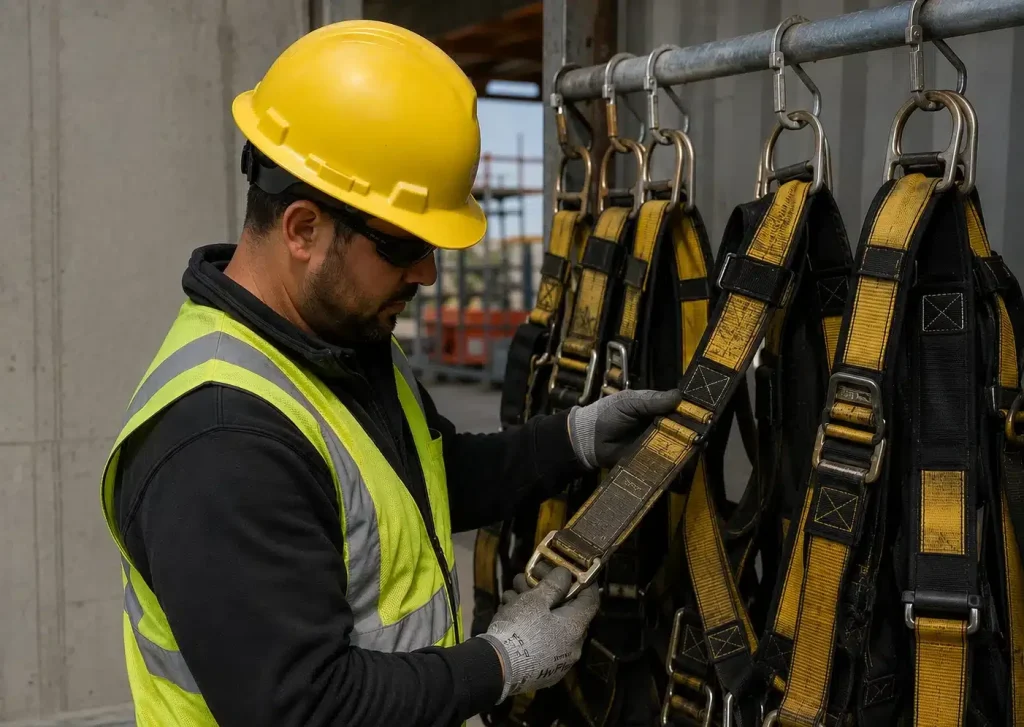
Understanding how, when, and by whom Harness & Lanyard checks should be carried out is a legal obligation for duty holders, site managers, and operatives alike. This essential knowledge is required to carry out pre-use & interim Safety Harness System inspections, ensuring equipment safety in accordance with the Work at Height Regulations 2005, The Personal Protective Equipment at Work Regulations 2002, PUWER 1998 & LOLER 1998. It delivers a thorough theoretical foundation for workplace compliance, which, when paired with hands-on practical training, can help learners achieve full competency required for statutory 6 monthly inspections.
Enrolling on harness and lanyard inspection training gives supervisors, safety officers, and site operatives the knowledge required to identify subtle equipment degradation, maintain accurate safety logs, and quarantine sub-standard equipment before an accident occurs.
The Legal Framework for Fall Protection Equipment
In the UK, fall arrest equipment is governed by four primary pieces of health and safety legislation. Compliance requires site managers and equipment users to understand how these regulations interact:
- The Work at Height Regulations 2005 (WAHR): Requires all work at height to be properly planned, supervised, and carried out by competent persons. Regulation 12 specifically mandates that equipment exposed to conditions causing deterioration must be inspected at suitable intervals.
- The Personal Protective Equipment at Work Regulations 2002: Classifies harnesses and lanyards as Category III PPE (designed to protect against fatal risks). Employers must provide suitable training, maintenance, and storage for all issued equipment.
- Provision and Use of Work Equipment Regulations 1998 (PUWER): Requires all work equipment to be safe for use, maintained in an efficient state, working order, and good repair, and accompanied by suitable health and safety records.
- Lifting Operations and Lifting Equipment Regulations 1998 (LOLER): Where harnesses or lanyards are used for work positioning, rope access, or personnel lifting operations, statutory periodic examinations must be recorded at least every six months by a designated competent person.
The Three Tiers of Harness and Lanyard Inspections
HSE operational guidance (INDG367) establishes a three-tiered inspection regime to maintain equipment integrity throughout its operational lifespan:
1. Pre-Use Checks (Tactile and Visual)
Carried out by the trained operative before every shift or work session. This involves a thorough visual and tactile examination of every component:
- Webbing: Flexing the material over fingers in an ‘N’ shape to expose hidden cuts, tears, pulled stitching, or chemical burns.
- Hardware: Checking D-rings, buckles, carabiners, and snap hooks for distortion, cracks, corrosion, sharp burrs, or failing gate mechanisms.
- Lanyards & Absorbers: Ensuring energy-absorbing packs have not deployed or suffered moisture ingress.
2. Detailed Interim Inspections
Recorded, formal examinations carried out between pre-use checks. The frequency depends on working conditions. Equipment exposed to aggressive environments—such as grit blasting, hot works/welding, acidic atmospheres, painting, or heavy abrasive use—requires interim inspections every 1 to 3 months.
3. Statutory 6-Monthly Detailed Examinations
A comprehensive, formally documented examination required by law every 6 months (or sooner under harsh environmental exposure). This must be performed by an appointed Competent Person with documented records retained for safety audits and HSE inspection.
Common Harness and Lanyard Defects to Watch For
During an inspection, any sign of damage requires immediate removal from service and quarantine. Primary rejection criteria include:
- Ultraviolet (UV) & Heat Degradation: Webbing becomes brittle, faded, hard, or discoloured due to direct sunlight or prolonged heat exposure.
- Chemical Contamination: Contact with acids, solvents, or alkalis can cause localized softening, flaking, or melting of synthetic fibers.
- Mechanical Damage: Cuts, abrasions, pulled stitches, torn webbing edges, or burn marks from welding sparks.
- Corrosion & Distortion: Rust, cracking, pitting, or bent metal components (D-rings, quick-connect buckles, scaffold hooks).
- Missing or Unreadable Labels: Equipment lacking visible serial numbers, manufacturing dates, CE/UKCA markings, or standard references must be retired immediately.
Knowledge Verification & Practice Tests
Testing theoretical knowledge is an essential step before undertaking formal equipment inspections on site. To check your understanding of regulatory inspection criteria, component failure points, and reporting procedures, take our free harness inspection mock test to prepare for formal certification.
Frequently Asked Questions (FAQs)
What is the maximum lifespan of a safety harness?
Most manufacturers specify a maximum shelf/service life of 5 to 10 years from the date of manufacture, provided the equipment passes all pre-use and periodic inspections. However, severe degradation or a fall event mandates immediate retirement regardless of age.
What happens to a harness or lanyard after a fall?
Any fall protection equipment subjected to the dynamic impact forces of a fall must be immediately withdrawn from service and destroyed to prevent re-use.
Can I write on a harness strap with a marker pen?
No. Standard permanent markers contain solvent-based chemicals that degrade synthetic nylon and polyester fibers. Only use manufacturer-approved fabric markers or dedicated asset tags on non-critical identification labels.
What is the difference between a pre-use check and a 6-month statutory inspection?
A pre-use check is a visual/tactile assessment carried out by the user before every shift without formal logging. A 6-month statutory inspection is a thorough, formally documented examination conducted by a trained Competent Person under LOLER/WAHR regulations.
What training is required to become a competent harness inspector?
Inspectors require a combination of theoretical knowledge (covering WAHR 2005, PUWER, LOLER, and manufacturer standards) and practical training in defect identification, equipment logging, and quarantine protocols.
Secure Your Equipment Compliance
Ensuring your site operations meet UK regulatory standards starts with proper training. Equip your team with the skills to identify critical equipment defects, manage inspection records, and maintain a safe working at height environment.